

Lyme and Summertime
The vampires that come out when the sun shines

I was sitting at the dining room table, happily eating lunch with my little family, when I glanced down and noticed a red splotch peeking out from my inner right thigh. Fork still in hand, I paused mid-bite, twisted my leg up, and crouched down to peer at my unexpected ailment. Staring back at me was an angry red series of concentric circles. I recognized that bullseye pattern immediately: I had been bitten by a tick. Bugger.
The offending tick was nowhere to be seen. It had clearly gorged itself, and once full, scarpered off with its belly heavy with a tasty meal of my hemoglobin. I live in southern Pennsylvania, so I knew that the chances were pretty high that the tick in question was a blacklegged tick (Ixodes scapularis) – also known as a deer tick. These ticks are common carriers of Borrelia burgdorferi, the causative agent of Lyme disease.
My partner looked at me with a quizzical expression as I heaved myself out of the chair with an admittedly over-dramatic sigh of exasperation.
“I’m off to urgent care”, I announced.
“You’re... Wait, what?” asked my partner. I lifted my leg onto my chair like that pirate from the rum bottles, and displayed the bright red target adorning my thigh.
“Oh, that’s not good,” he responded as he watched me grab my keys, “I’ll see you in a bit.”
As I drove to urgent care, I tried to remember what I knew about Lyme disease. I knew that infection with the B. burgdorferi bacterium wasn’t guaranteed. These bacteria normally reside in the tick’s midgut, so it takes a while – roughly 24 hours – for them to ride the gastrointestinal highway to the tick’s salivary glands before they make the jump to the human bloodstream.
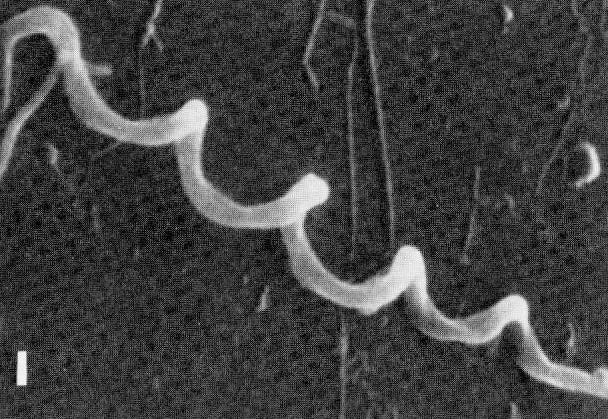
What I didn’t know at the time was that the tick digging in for a fancy feast actually serves as a trigger that fires up the B. burgdorferi bacteria, acting as a warhorn calling them to battle. Upon hearing the call, they begin their active migration towards the salivary glands. And as they travel, they get dressed for the occasion. They discard their tick-friendly surface proteins (OspA and OspB) and instead don newly minted proteins (OspC) that are designed to survive in a mammalian system. And once in the mammalian bloodstream (i.e., me!), these bacteria begin a series of costume changes that Taylor Swift would be proud of: By switching out the proteins on their cell surface (antigens), they effectively confuse the immune system by looking different every time it’s encountered, which helps them effectively dodge elimination and spread within the body.
After arriving at urgent care, I was swiftly ushered into an exam room by a nurse who took one look at my circular rash and reached the same conclusion I had.
“Do you have the tick?” she had asked, “Or do you know what type it was?”
The answer to both questions was no. I had no idea.
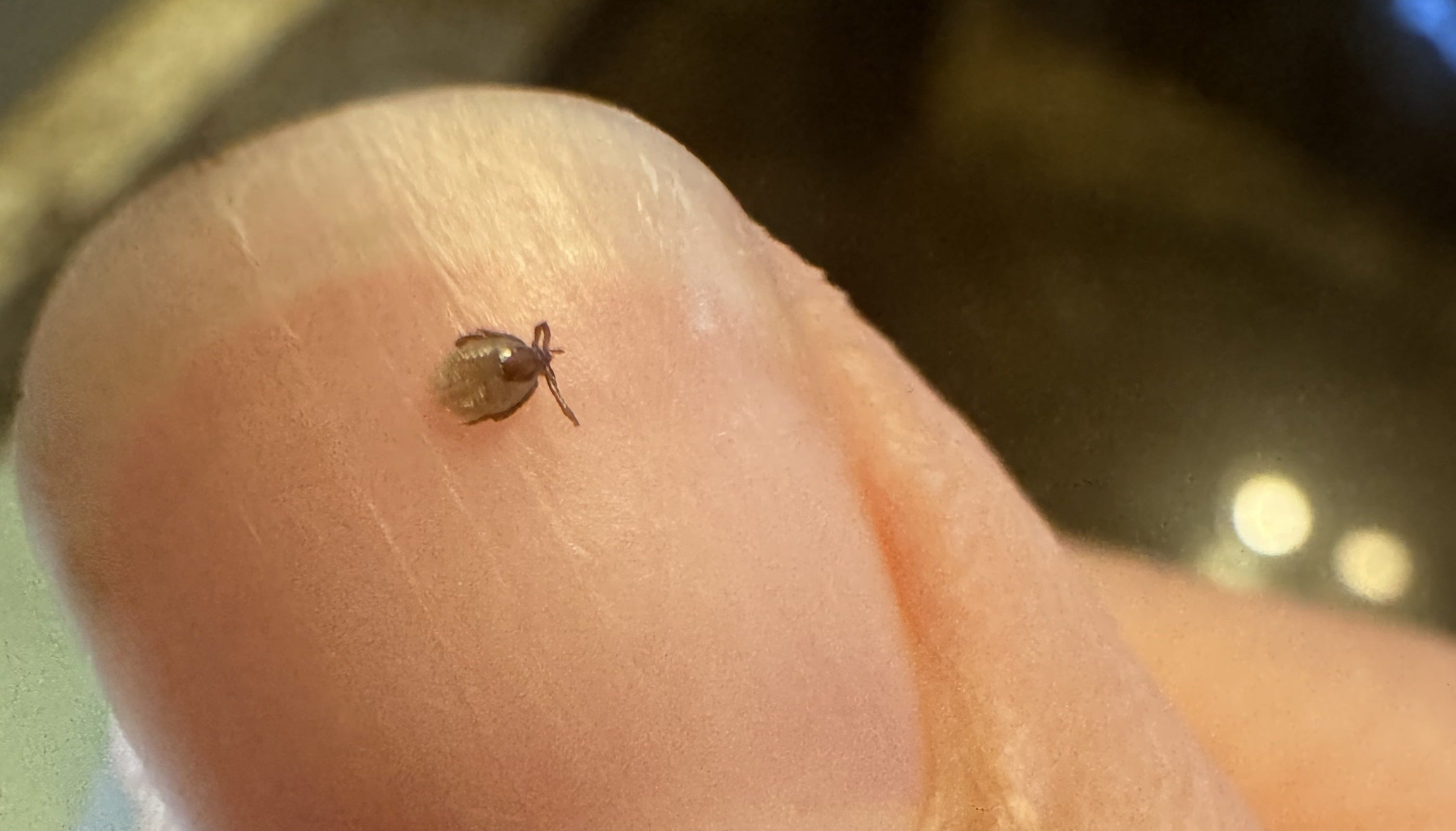
While deer ticks are the most common species in my area, there are plenty of others around, each carrying their own flavor of bacteria. The American dog tick (Dermacentor variabilis) is home to Rickettsia rickettsii, the bacterium that causes Rocky Mountain spotted fever, a rather nasty disease that can rapidly send you to the obituaries page if left untreated. Also common are Lone Star ticks (Amblyomma americanum), which are most famous for their ability to make people allergic to red meat by inoculating them with a sugar called galactose-alpha-1,3-galactose, or simply “alpha-gal”. Lone star ticks can also carry the same bacteria as the deer and dog ticks, along with additional microbes like Ehrlichia species and Francisella tularensis. The latter pathogen is so nasty that researchers have even suggested that it be considered as a potential weapon in bioterrorism!
The good news for me was that most tick-borne bacterial infections, if caught in time, can be wiped out with a solid regimen of antibiotics such as doxycycline or amoxicillin. Doxycycline stops bacteria from making any proteins, while amoxicillin stops them from making cell walls. Doxycycline is typically the go-to solution because it knocks out a wider range of bacteria. However, it can cross the placenta and interfere with bone and tooth development in babies, so if you’re pregnant or breastfeeding, regimens of amoxicillin are normally recommended instead. Needless to say, I stuck to my prescribed regimen of antibiotics with unmatched fervor and dedication. Lyme disease didn’t sound like fun.
Lyme disease typically progresses in three phases:
Stage 1: Within the first month, everything just aches. You’ll be tired and feverish while your joints moan and groan. The B. burgdorferi bacteria won’t have traveled too far from the infection site, and most of your symptoms stem from your body trying to fight off the invaders.
Stage 2: If left untreated, the bacteria continue to dodge your immune system and travel toward oxygen-poor regions of your body, such as your nerves and heart. As they set up shop in these tissues, you would typically experience increasingly nasty effects such as neck stiffness, increased pain, exhaustion, an irregular heartbeat, and neurological issues, including facial palsy, numbness and tingling, loss of muscle control, and inflammation of and around the brain.
Stage 3: After months to years, the disease progresses to a point where the bacteria have effectively caused arthritis in your large joints (like your knees) and severe cognitive issues, such as impaired memory, mood changes, and oppressive brain fog.
I was lucky for sure. I had caught the bullseye rash relatively quickly, and the antibiotics seemed to have staved off the infection and any life-altering neurological conditions that come with it. But as the summer months roll in, with their days filled with sunshine and fresh air, be sure to do a tick-check tango after every outdoor adventure. If you find a tick on you, try to remember to pop it in a bag and head straight to urgent care. The doctors will assess it and any symptoms to get you the best care possible.
If you’re still curious about the B. burgdorferi bacterium and how it pulls off this bodily heist in broad daylight, head over to “Yuck”, where my phenomenal collaborator, Dr. Elizabeth Pursey, has all the horrifying microbial details waiting for you in another one of her fantastic “Bug Reports”!
References
https://extension.psu.edu/common-ticks-and-tick-borne-diseases-in-pennsylvania
https://doi.org/10.1016/S0092-8674(00)80206-8
https://doi.org/10.32481/djph.2021.01.013
https://www.cdc.gov/rocky-mountain-spotted-fever/about/index.html
Wonderful information, and well-written, as always. If breastfeeding, based on removal timeline, you can ask about prophylactic Doxycycline (a single dose), which is about 85 percent effective in preventing Lymes!
So timely!! Ticks are everywhere this year- I love the way you outline concepts in such a fresh way. Tick-borne illness symptoms are always so nonspecific too, it’s such an interesting rabbit hole since there are a lot of wacky chronic Lyme treatments out there (esp since the best treatment is early and seeking care like you did!). Kudos friend, loving your Substack!!